

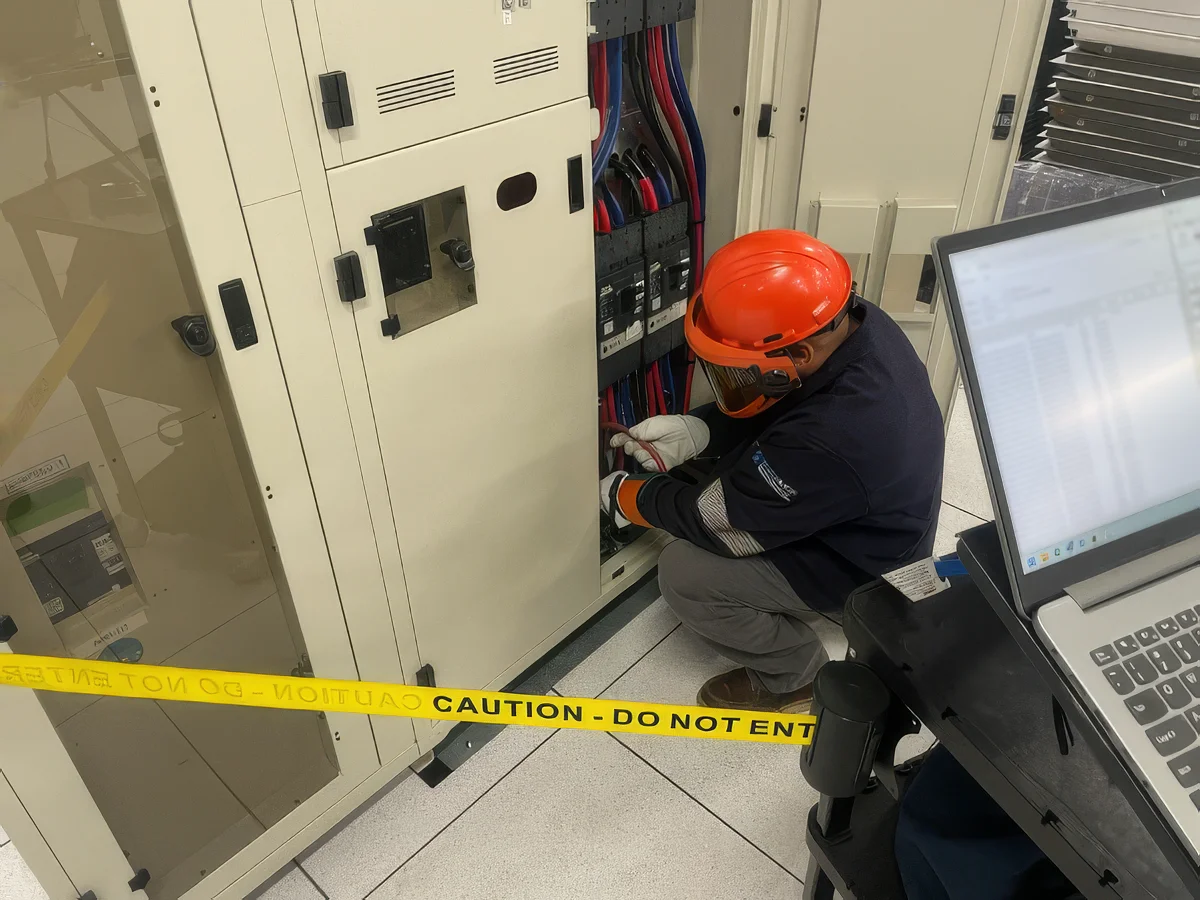
Electrical compliance audits make most facilities nervous. They don’t need to. Auditors aren’t trying to catch you off guard. They’re checking that your systems are safe and that you have a real maintenance program in place. Facilities that run into trouble usually aren’t doing anything seriously wrong. They have documentation gaps, deferred maintenance, or records that are out of date. Here’s how to prepare, whether you have 30 days or 3 days.
Before we get into the steps, it helps to know who actually shows up to run these audits, and why. Electrical compliance audits come from a handful of sources, and each one has its own reason for being there.
OSHA is the one most facility managers think of first. An OSHA visit can happen three ways. It can be complaint-driven, meaning a worker or someone else reported a concern. It can be a programmed inspection, where your industry or facility type got flagged for a routine look. Or it can happen after an incident, like a shock, a burn, or an arc flash event. Post-incident visits are the most detailed, because the inspector already knows something went wrong.
Insurance carriers are the second common source. Your carrier may send someone to do a risk assessment. They want to know how likely your facility is to have a fire or an equipment failure that turns into a claim. What they find can affect your premium or your coverage. Healthcare facilities have another layer: the Joint Commission runs surveys tied to accreditation, and electrical safety is part of that review. Multi-site companies often run their own internal audits, where corporate sends someone to check that every location meets the same standard. And then there’s the local authority having jurisdiction, or AHJ. The AHJ usually shows up when you pull a permit for electrical work, or when your building changes how it’s used, like turning a warehouse into a production space.
It also helps to understand the difference between an audit and an inspection, because people use the words like they mean the same thing. They don’t. An audit is a formal review against a specific written standard. It follows a process, and it produces a record. An inspection can be informal, like a contractor walking your floor and pointing things out. Both turn up findings. But the audit creates a paper trail, and that paper trail can be used later in enforcement or in a lawsuit. That’s why an audit deserves more preparation than a casual walkthrough.
One last thing to keep in mind: facilities that keep up with maintenance tend to do better in audits. It’s not because they spend the week before scrambling to look audit-ready. It’s simpler than that. Good maintenance produces good records as a side effect. When you service equipment on a schedule and write down what you did, you end up with exactly the paper trail an auditor wants to see. The records are the first thing they look at. A facility that maintains its systems already has them.
Get your paperwork together first
Auditors look at records before they look at anything physical. If your documentation is a mess, that impression carries into the walkthrough. Pull everything together before the audit date lands on your calendar.
Here’s what you need on hand:
Here’s what most people don’t realize about those records. Auditors aren’t reading each one on its own. They’re looking for a pattern. A single maintenance record doesn’t tell them much. What tells them something is a steady run of inspections, findings, and fixes over time. That pattern says your facility has a real program, not a binder someone threw together last week.
This cuts the other way too. A stack of records that all look the same, where nothing was ever found wrong, can raise suspicion. Real equipment develops real issues. A year of inspection reports that every single time say “all good, no findings” doesn’t look thorough. It looks like someone checked a box without actually looking. Honest records with real findings and real fixes read better than a spotless stack that nobody believes.
The arc flash study deserves a closer look, because auditors do more than check that you have one. They check the date, and they compare it to what’s changed in your building. Say your one-line diagram shows a panel or a transformer that didn’t exist when the study was done. That’s a problem. Or say the study is more than five years old and you’ve made changes since. In both cases you may have to explain why the old study still holds up. If you can’t, you may need a new one before the audit.
Training records need to show four things for each person: the name of who was trained, the date, what the training covered, and who delivered it. NFPA 70E doesn’t treat training as a one-time event. It requires retraining in specific cases: when an inspection shows someone isn’t doing the work safely, when a worker gets a new task, or when conditions at the facility change. So if your records show that everyone got trained on the same day three years ago and nothing has happened since, an auditor will ask about it. That gap tells them your training program stopped after the first round.
Corrective action documentation is another place auditors dig in. If a past inspection found problems, they want to know what you did about them. The best thing you can hand them is a written corrective action plan with dates and completion signatures. The worst thing is a verbal “yeah, we took care of that” with nothing on paper. And if a past finding is still open, don’t panic. A documented plan with a real timeline beats having nothing at all. It shows you know about the issue and you’re working it.
One more thing, and this matters. If you find gaps in your own documentation while you’re preparing, do not make records up to fill them. Acknowledge the gap. Write down when it started and what you’re doing to close it. Auditors can tell the difference between a facility that’s missing records and a facility that’s forging them. The first is a compliance problem you can fix. The second is a much bigger problem, and it turns a routine finding into a question about whether anything you’ve shown them is real.
Know which standards apply to your facility
Not every facility is subject to the same requirements. The standards that come up most often in an electrical compliance audit:
NFPA 70E is worth understanding a little deeper, because it changed in a way that affects your paperwork. The 2021 edition updated the hierarchy of risk controls, which is the order of steps you’re supposed to take to reduce electrical risk. The short version: the standard now clearly requires you to show that you thought about de-energizing the equipment before you decided to work on it live. And that decision has to be in writing. It isn’t enough to say your crew always considers it. If a job was done energized, an auditor may want to see why de-energizing wasn’t the choice.
The National Electrical Code works a bit differently than people expect. When OSHA or an AHJ audits your building, they compare your installed electrical systems against the NEC edition that was in effect when the work was installed, not today’s edition. So an older system that was built to code twenty years ago is generally fine, even though it wouldn’t meet the current code. The catch is modifications. If you’ve changed or added to a system in a way that triggers current code, that new work has to meet current code. Old work stays under old rules. New work comes up to today’s.
State codes add another wrinkle. Many states adopt the NEC but then amend it with their own changes. California is a clear example: it runs the California Electrical Code, which is the NEC with state amendments layered on top. If your facility sits in a state with amendments, you need to know which edition your state adopted and which amendments apply. The base standard alone won’t tell you the whole story.
This gets harder if you run facilities in more than one state. Each state can adopt the same underlying standard on a different timeline and with different amendments. What passes an inspection in Texas may not pass in California, even though both point back to the NEC. If you operate across state lines, it pays to have an electrical contractor who works in multiple states and actually knows the differences between them. That knowledge is hard to get from a code book and easy to miss until an audit finds it for you.
If you’re not sure which standards apply to your facility, that’s a fair question to ask your electrical contractor before the compliance audit comes. Going in without knowing what you’re being evaluated against is a disadvantage you don’t need.
Facing an audit and want a second set of eyes before the official review? We do pre-audit inspections to help facilities understand where they stand. Not to judge, just to give you an honest look before the auditors arrive.
Call (775) 227-7627 or Schedule a Pre-Audit Inspection
Walk the facility with fresh eyes
Once your documentation is in order, do a physical walkthrough. Try to look at your facility the way an auditor will. Here’s what they check most consistently:
The arc flash labels are worth a second look, because “has a label” and “has a compliant label” are not the same thing. NFPA 70E says the label has to include the nominal system voltage and the arc flash boundary. On top of that, it has to include at least one of the following: the available incident energy with its working distance, the minimum arc rating of clothing, or the required PPE category. So a label that just reads “DANGER, ARC FLASH HAZARD” and nothing else does not meet the requirement. It looks like a label, but it’s missing the information a worker needs to pick the right protection.
The 36-inch working space rule trips up more facilities than almost anything else, usually because people measure it wrong. The 36 inches is measured from the face of the equipment, not from the wall behind it. And the space has to stay clear all the time, not just the morning of the audit. Anything inside that zone is a violation: a storage rack, a stack of pallets, spare materials, a rolling cart someone parked there. Auditors will note it, and “we usually keep it clear” is not a defense if it isn’t clear when they walk by.
Electrical room access is another thing they check. Electrical rooms and switchgear rooms should be locked so that only authorized people can get in. If anyone with a building key can walk into the room that holds your main switchgear, that’s a finding. Signage matters here too. At a minimum, the door should say something like “ELECTRICAL HAZARD, AUTHORIZED PERSONNEL ONLY.” A locked room with no sign, or a sign with no lock, only gets you halfway.
Extension cords and temporary wiring are among the most commonly cited issues in electrical compliance audits, and they’re easy to overlook because they feel harmless. Temporary wiring is meant to be temporary. It should not be doing the job of permanent wiring. If a piece of equipment has been running off an extension cord for six months, that’s not temporary anymore, and an auditor will call it what it is: a finding. Walk your floor and look for cords that have quietly become permanent.
Last, check your GFCI protection. Ground fault circuit interrupter outlets are required in specific spots: bathrooms, kitchens, outdoor areas, construction zones, and anywhere near water. Two things go wrong here. Sometimes the protection was never installed where it’s required. Sometimes it was installed but has failed over time, because GFCIs do wear out. Testing them costs almost nothing and takes seconds per outlet. Missing GFCI protection in a spot that requires it is a common finding, and it’s one of the cheapest ones to prevent.
Address what you can, document the rest
After the walkthrough, triage your list. The simplest way to do this is to sort every finding into one of three buckets.
Bucket one is anything you can fix in a day. A missing panel directory. A faded label. Storage blocking a panel. GFCI outlets that failed a quick test. These have no reason to still be there on audit day. Fix them before the auditor arrives, period. They’re cheap, they’re fast, and every one you clear is one less finding on the report.
Bucket two is anything that needs scheduling and budget. A panel that needs replacing. A breaker that needs testing. An arc flash study that needs updating. These can’t be done overnight, and rushing them creates its own problems. Put each one into a written corrective action plan with a target date. That way the item shows up as “known and scheduled” instead of “missed.”
Bucket three is major capital work, the kind that needs real planning and real money. You’re not going to finish this before the audit and nobody expects you to. What matters is that you have a documented plan and can explain it. An auditor who sees a funded, scheduled plan for a big project treats it very differently than a problem you can’t account for.
There’s real value in handing the auditor your corrective action list yourself, before they go looking. A facility that walks in and gives the auditor a current finding list, with completion dates for everything in progress, is telling them something: this place has a working maintenance system. Auditors have walked through enough facilities to know the difference between a place that’s genuinely trying and a place doing the bare minimum. Being upfront puts you clearly in the first group.
When you sort your buckets, weight them by safety, not just by cost. Some findings carry more legal and safety risk than others. Missing arc flash labels on energized equipment that your workers open all the time is far more serious than a panel directory that’s a little out of date. Put the things that can hurt a person at the top of your list, no matter what they cost to fix. A cheap fix that protects a worker beats an expensive fix that only tidies up paperwork.
Brief your team
Your maintenance staff should know the audit is coming. Tell them three things:
Here’s what auditors actually watch when they walk the floor with your staff. They watch how workers approach electrical equipment. Do they grab their PPE before opening a panel, or do they just open it? Do they know the lockout/tagout steps for the equipment they work on? If they read an arc flash label, do they know what it’s telling them? A team that handles itself the right way sends a strong signal about the whole facility. A team that has to hunt for where the PPE is stored sends the opposite one.
Tell your workers how to talk to the auditor, too. The rule is simple: answer honestly and directly. Auditors are not there to get individual workers in trouble. But a worker who clearly doesn’t know the facility’s own procedures is a finding, the same as a missing label. So the goal isn’t to coach people on what to avoid saying. The goal is to make sure they actually know their procedures and can show it. Train them to demonstrate what they know, not just to dodge the wrong answer.
Pick one person to be the auditor’s escort for the day. That person should know where all the documentation lives, know the layout of the building, and be able to answer general questions about the maintenance program. It sounds small, but not having a designated escort who knows the place makes the whole audit slower and rougher. When the auditor asks for a record and the escort can put a hand on it in a minute, everything goes smoother.
Auditors pay attention to how your team carries themselves. A crew that knows the procedures and handles themselves confidently sends a message, even when the facility isn’t in perfect shape.
That third trap, the verbal-only finding, happens more than it should, so it’s worth spelling out. A contractor comes in, walks the floor, tells the facility manager what they found, and leaves without writing any of it down. Maybe the facility even acted on it. But there’s no record the inspection happened, no record of what was found, and no record of what was done about it. From a compliance point of view, if it isn’t written down, it didn’t happen. Get findings in writing every time, even when you trust the person who found them.
Watch out for the “it’s always been that way” trap, too. Facilities inherit conditions from previous owners, old contractors, and old configurations that don’t meet today’s standards. When an auditor points at one of these, the natural response is “we’ve been doing it this way for 20 years.” That is not a defense. If a condition doesn’t meet the standard, how long it’s been in place doesn’t matter. Age doesn’t make a violation compliant. It just means the violation has been there a long time.
And don’t lean on permits as proof that everything is fine. A permit pulled for electrical work confirms one thing: that the work was inspected at the time it was installed. It does not confirm the work is still compliant if the facility has been changed since. It does not confirm that ongoing maintenance has kept the system in good shape. Permits are a starting point, not the whole picture. Treat them as one piece of evidence, not the final word.
Electrical compliance audits almost always produce a list of findings, even in well-run facilities. The goal isn’t a perfect score. The goal is to show that your facility takes electrical safety seriously and has a real system for maintaining it. What you do after the audit matters as much as what you do before it. Fix findings in order of severity, document the corrective actions, and keep those records. It will make the next audit go faster and the one after that faster still.
When the report comes back, know what you’re actually looking at, because the words carry different weight. An observation is the auditor’s informal note that something could be better. It isn’t a formal finding, and it doesn’t come with a deadline. A violation is a formal finding that has to be addressed. A citation goes further: it carries a financial penalty and a deadline for fixing the problem. Read your report carefully and sort the items by which is which, because your response should match the category. You don’t want to treat a citation like a casual suggestion.
The response timeline matters more than most people expect. Most citations come with a deadline for correction, and that deadline is not a suggestion either. In almost every case, acknowledging the finding and sending back a corrective action plan with a realistic timeline lands far better than ignoring it or fighting a finding that’s clearly valid. Auditors and agencies deal with facilities that go quiet or get defensive all the time. A facility that says “you’re right, here’s our plan and here’s the date” stands out in a good way.
One more thing, and it’s the part that helps you internally. An audit citation is often the strongest tool a facility manager has for getting maintenance budget approved. Asking for money to update an arc flash study or replace aging switchgear can be a hard sell in a normal budget meeting. “We were cited for this by OSHA” is a very different sentence. It tends to move things that were stuck. So when a finding lands, don’t just treat it as a headache. Use it. A documented citation, paired with a clear plan and a cost, is exactly the kind of thing that finally gets electrical work funded.
Want a second set of eyes before your audit?
We do pre-audit inspections specifically to help facilities see what an auditor is likely to find. Not to judge, just to give you an honest look before the official review. Call (775) 227-7627, Monday through Friday, 7am to 6pm Pacific time.